
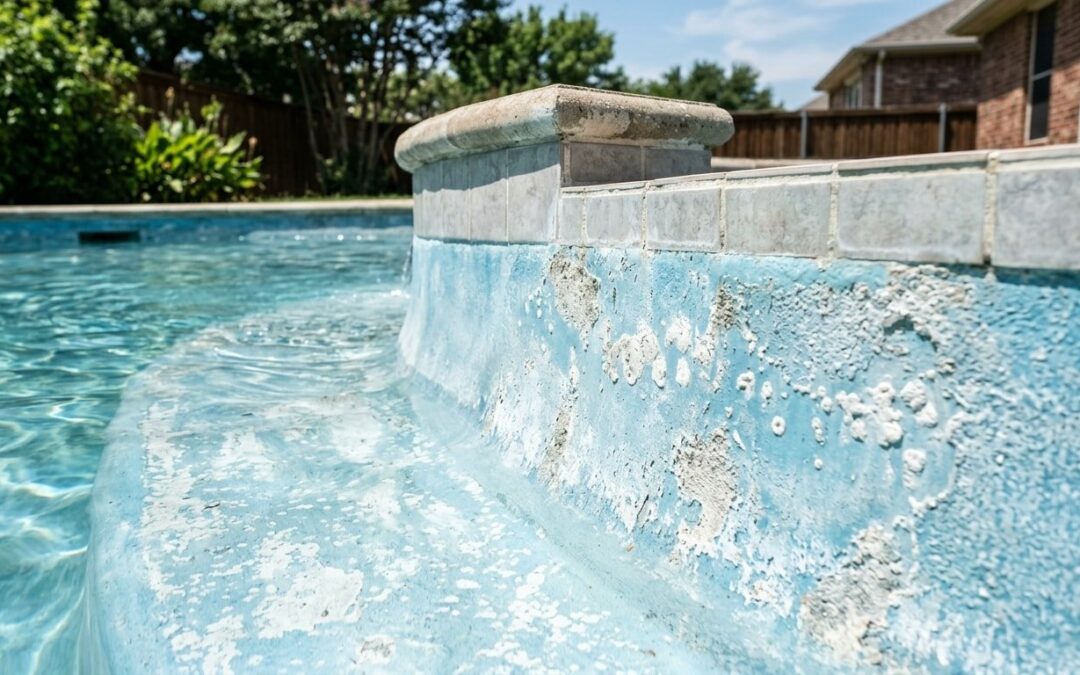
What Do White Spots on Pool Plaster Mean in Arlington TX?
If you’ve noticed white spots on your pool plaster, you’re not alone — and it’s a sign worth taking seriously. White spots on pool plaster in Arlington TX are one of the most common issues pool owners report, and they almost always point to some form of surface deterioration. The good news: diagnosing the problem early can save you from a much costlier repair down the road.
The Most Common Causes of White Spots
Not all white spots are the same. Here’s what they typically indicate:
Calcium scaling is the most frequent culprit. Hard water — which is very common in the DFW area — causes calcium deposits to build up on your plaster surface. These show up as rough, chalky white patches that feel crusty to the touch.
Spot etching happens when pool chemistry goes out of balance. Low pH or low calcium hardness causes the water to become aggressive, literally eating away at the plaster surface. This leaves pitted, lighter-colored spots scattered across the pool walls and floor.
Delamination is more serious. When plaster separates from the underlying shell, you may see raised, blister-like white areas. This typically requires replastering to fully correct.
Algae staining that has been treated can also leave white or bleached patches, though these are usually cosmetic rather than structural.
According to the Pool & Hot Tub Alliance, maintaining balanced water chemistry is the single most important factor in extending plaster life.
When Should You Call a Pool Renovation Professional?
Minor calcium scaling can sometimes be managed with chemical treatments or light brushing. But if you’re seeing widespread white spots, rough textures, or soft/hollow-sounding areas when you tap the surface, it’s time to get a professional evaluation.
Left untreated, deteriorating plaster can lead to:
- Sharp surfaces that scratch swimmers
- Faster algae growth in pitted areas
- Water leakage through exposed shell material
- Higher chemical costs as water absorbs into the compromised surface
The Arlington TX climate — with its intense summer heat and mild winters — puts real stress on pool plaster over time. Most plaster surfaces last 10–15 years with proper care, but water chemistry issues can cut that lifespan significantly shorter.
If you’re considering a full resurfacing, explore our Mini Pebble Plaster options for a beautiful, durable upgrade over standard white plaster.
Frequently Asked Questions
Are white spots on pool plaster dangerous to swimmers?
Most white spots are not immediately dangerous, but rough etched or delaminated plaster can scratch skin, especially on feet and hands. It’s worth getting the surface evaluated before the problem worsens.
Can I treat white spots myself without replastering?
Mild calcium scaling can sometimes be reduced with a pumice stone or a pH-balancing treatment. However, if the spots are caused by etching or delamination, DIY fixes are usually temporary — professional replastering is the lasting solution.
How long does pool plaster typically last in Arlington TX?
With balanced water chemistry and regular maintenance, pool plaster generally lasts 10–15 years. The hot Texas summers and hard local water can accelerate wear if chemistry isn’t kept in check.
How much does pool replastering cost in Arlington TX?
Costs vary depending on pool size, surface material, and the extent of damage. A professional inspection gives you the most accurate estimate. Contact Trublu Pool Renovations at (817) 261-7665 for a consultation.
What’s the difference between calcium scaling and plaster etching?
Calcium scaling is a buildup on top of the surface caused by hard water — it feels rough and crusty. Etching is actual erosion of the plaster surface caused by low pH water — it leaves pitted, dull spots that can’t be brushed away.
Will fixing my water chemistry stop white spots from forming?
Keeping your water properly balanced is the best prevention. But if spots have already formed, chemistry corrections alone may not restore the appearance — surface treatment or replastering may still be needed.
How do I know if my plaster needs full replacement or just a repair?
If the white spots are isolated and surface-level, spot repairs may be sufficient. Widespread etching, soft areas, or delamination across a large portion of the pool usually means it’s time for a full resurface. A professional evaluation will tell you for sure.
Ready to get a clear answer on what’s happening with your pool? Contact Trublu Pool Renovations today — we’ve been serving Arlington and the DFW Metroplex since 1990, and we’re here to help you make the right call.